

Plus de 1300 avis certifiés
à découvrir sur TrustPilot
Blogs & Actualités
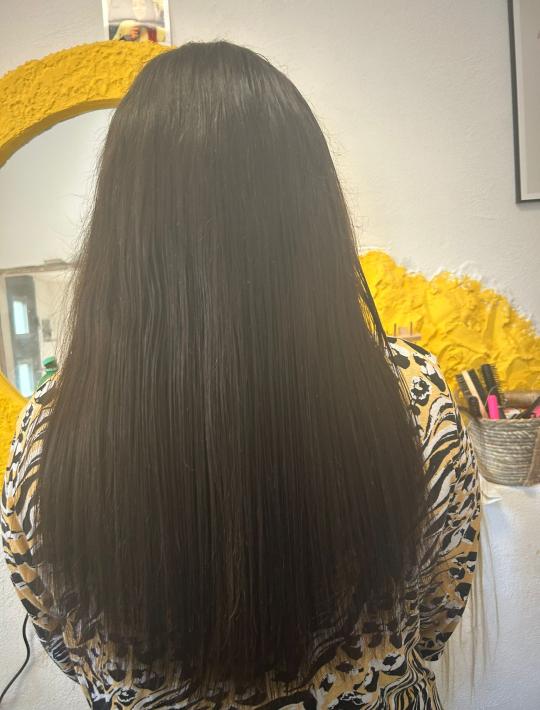
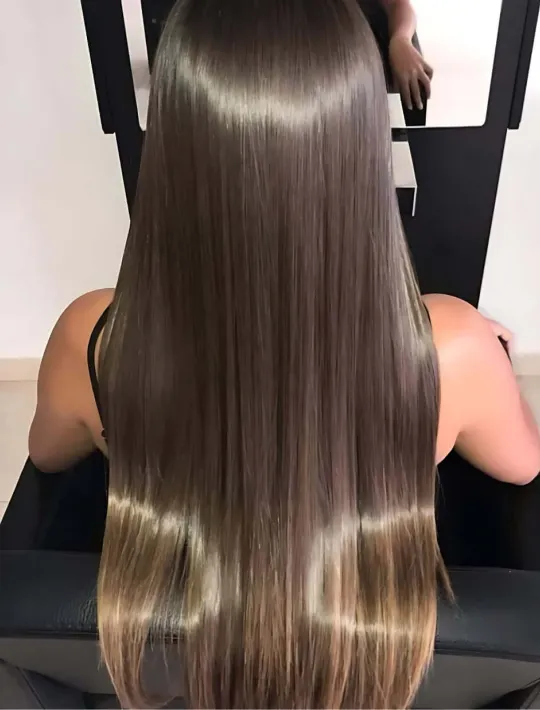
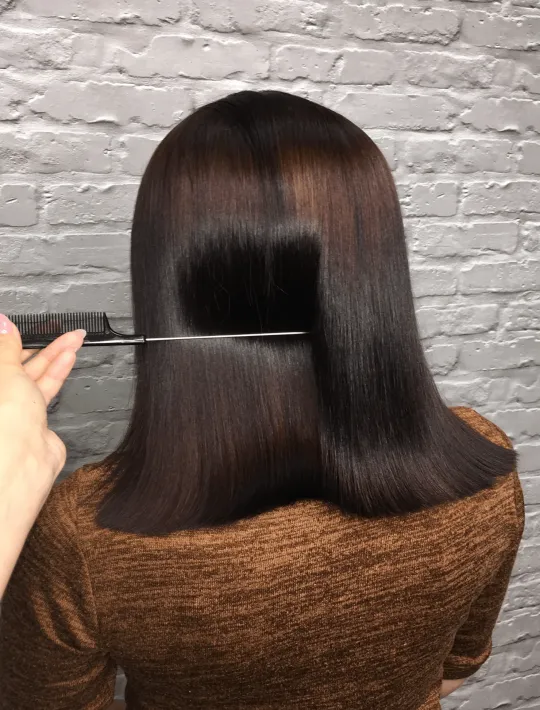
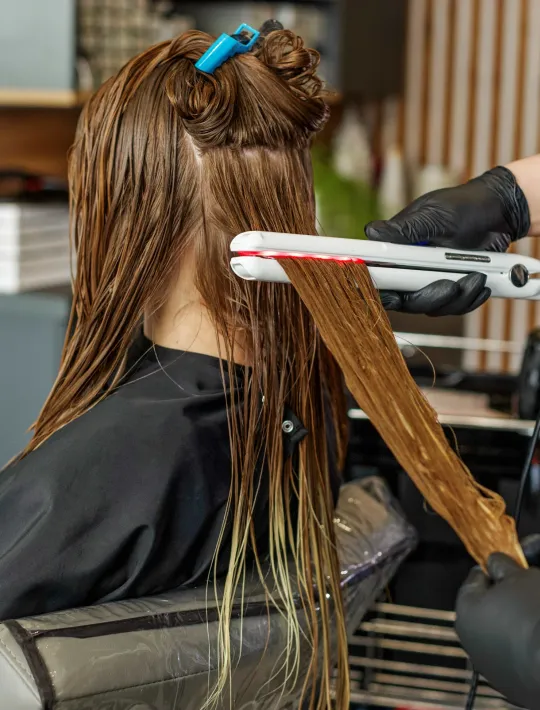
Focus on hair straightening: benefits, maintenance and who is it for?
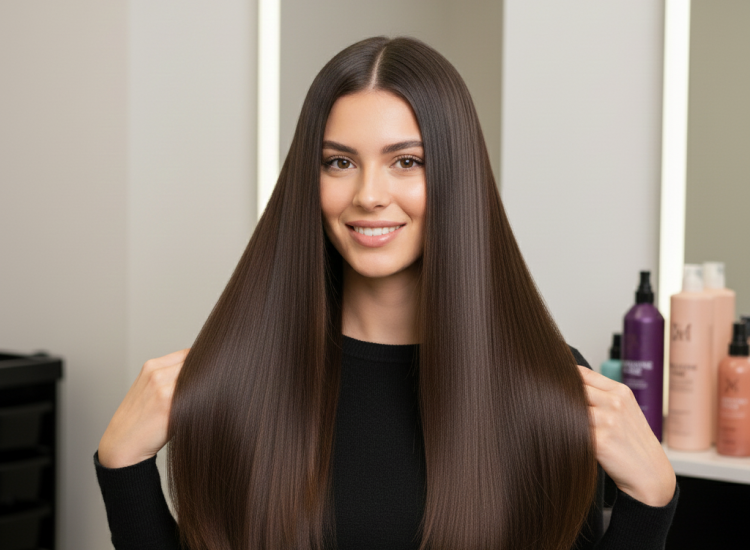
The dream of smooth, silky, easy-to-style hair is a reality for many thanks to various hair straightening techniques. But with so many options available (Brazilian, Japanese, tannin, Korean, etc.), it's easy to get confused! Which straightening technique is right for you? What are the benefits and specific maintenance requirements for each technique?
Let's take a closer look at the world of straightening to help you make the best choice.
I. The main types of straightening and how they work
1. Brazilian straightening (straightening treatment)
- How it works: A thermo-active treatment based on keratin. It nourishes the hair, reduces frizz and relaxes curls without completely straightening them.
- Duration: 3 to 6 months.
- Who is it for? Damaged, dry, curly, wavy or frizzy hair. Ideal for those who want to reduce volume and have more supple hair.
2. Japanese straightening (permanent straightening)
- Mechanism: Uses plant polyphenols (tannins) to create a chain of molecules inside the cortex. It is an organic method that does not use harsh chemicals.
- Duration: 4 to 8 months.
- Who is it for? All hair types, including the most sensitive or highlighted hair. Perfect if you are looking for long-lasting straightening without weighing your hair down.
3. Lissage Japonais (Lissage Permanent)
- Mechanism: This is a permanent straightening treatment that alters the structure of the hair (breaks internal bonds) to make it permanently straight.
- Duration: Permanent (the client will only return to have new growth straightened). Root regrowth.
- Who is it for? Very curly, frizzy or kinky hair. Not recommended for very fine, sensitised or bleached hair.
4. Korean straightening
- Mechanism: Similar to Japanese straightening, but uses a formula enriched with conditioning agents. It relaxes curls and adds shine, but does not leave hair as straight as Japanese straightening.
- Duration: Permanent (the client will only return to smooth new growth). Root regrowth.
- Who is it for? Wavy to curly hair, for those looking for long-lasting smoothing with more flexibility than the Japanese method.
II. The major benefits of straightening
- Reduced frizz: This is the most immediate and appreciated benefit, especially with Brazilian and tannin straightening.
- Time saving: Daily styling is considerably reduced. A simple blow-dry is all it takes for flawless results.
- Shine and softness: Keratin or tannin-based treatments coat the hair fibre, close the cuticles and reflect light better.
- Hair fibre health (for non-permanent straightening): Brazilian or tannin straightening acts as a deep treatment that repairs and nourishes the hair from within.
III. Essential maintenance for long-lasting results
To ensure your straightening treatment lasts as long as possible and retains its shine, maintenance is crucial:
- Say no to sulphates! Be sure to use shampoos that are free from sulphates (SLS/SLES) and sodium chloride. These chemicals dissolve and remove the straightening product (keratin/tannin) from the hair fibre.
- Wash less, care more: Space out your shampoos and use a mask or conditioner rich in keratin or tannin once a week.
- Say goodbye to salt water and chlorine: Salt and chlorine damage the straightening treatment. Protect your hair and rinse it immediately after swimming.
- Hairdryer required (for Brazilian straightening): After washing, use a hairdryer. Heat is essential to reactivate the straightening agents in Brazilian straightening treatments.
- Root maintenance (permanent straightening): For Japanese or Korean straightening, only the regrown hair will be treated at your next appointment, so as not to damage the lengths that have already been straightened.
Our expert advice
Whatever type of straightening you are considering, the first step is always the same: a hair diagnosis. Come and see us! We will analyse the nature of your hair (porosity, thickness, history) to guide you towards the technique that will guarantee the desired result without compromising the health of your hair.
Ready to say goodbye to frizz? Make an appointment
Hair diagnosis: the step everyone skips and why you shouldn't
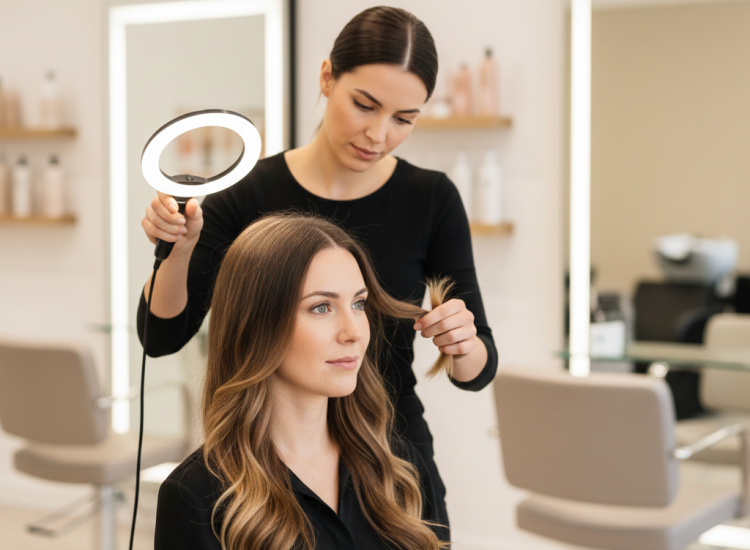
At Jacky Hair Style, we believe that lasting beauty begins with a thorough understanding of your hair. You may be used to sitting down in the chair and immediately ordering your cut or colour. However, the most crucial step in achieving the perfect result is the hair diagnosis.
Why is this step so often overlooked, and why is it the cornerstone of our professional services?
What is a hair diagnosis?
It's not just a simple discussion. It's a comprehensive assessment of the condition of your hair and scalp. Our experts examine three fundamental elements:
- Your hair history: Past chemical treatments (bleaching, perms), the products you use, your styling routine and even your lifestyle (stress, diet).
- The condition of the hair fibre: Porosity, elasticity, diameter, level of hydration and cuticle wear. This is where we detect whether the hair is dry, damaged, or simply dehydrated.
- The health of the scalp: The presence of dandruff, excess sebum, sensitivity, or an imbalance that could affect growth or colour retention.
The costly mistake: ‘I want this colour, period.’
Without a diagnosis, the hairdresser is working blind, which often leads to disappointment:
- Unexpected colouring results: If your hair is too porous, it will absorb too much pigment and the colour will be darker than expected. If it is too damaged, the colour will not last.
- Irreversible damage: Attempting to bleach hair that is already fragile can cause immediate breakage. Diagnosis allows you to say NO to a technique if it endangers the health of your hair.
- Wrong choice of products: Using products for dry hair on an oily scalp can aggravate the problem.
The diagnosis allows us to tailor the chemicals and tools not to your immediate desires, but to your hair's actual ability to withstand them.
The exclusive benefits of our diagnosis
At Jacky Hair Style, our diagnosis takes an average of 30 minutes and guarantees you:
- A tailor-made prescription: We recommend the cut, colour and, above all, specific treatments (in the salon and at home) that will correct underlying problems.
- Longer-lasting colour: By treating porosity, we ensure better adhesion and longer-lasting pigments.
- A smart investment: By treating the cause first (dry hair, sensitive scalp), you spend less on ‘repairs’ in the long run.
Don't play Russian roulette with your hair. The next time you walk through our door, we'll take the time. That's our promise of quality.
Ready to reveal the best of your hair?
Make an appointment today for a personalised hair diagnosis and a free consultation with one of our experts.
Keep your colour vibrant: The ultimate guide to long-lasting colour
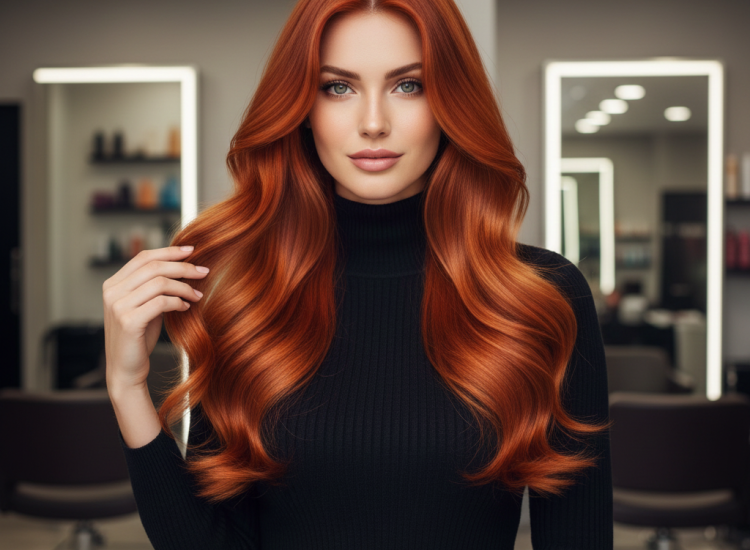
You've just left the salon with perfect, luminous colour full of highlights. Gorgeous! But how can you make this beauty last without it fading, dulling or washing out too quickly? Maintaining your colour is essential for prolonging its shine and keeping your hair healthy.
Choose sulphate-free products: sulphates are the most aggressive cleansing agents and wash out your colour with every wash.
Here are some tips and tricks to make your colour last longer.
1. The golden rule of washing
The way you wash your hair is the number one factor in colour fading.
- Wait 48 to 72 hours after colouring: After applying the colour, the hair cuticles slowly close. Washing too soon may cause the pigments to run before they are completely sealed inside the hair fibre.
- Use specific products: This is non-negotiable! Invest in a sulphate-free shampoo and conditioner specially formulated for coloured hair. Sulphates are harsh cleansing agents that open the cuticle and wash out the colour.
- Wash with cold or lukewarm water: Hot water opens the hair cuticle and allows colour molecules to escape. Use cold (or lukewarm at most) water for the final rinse to seal the cuticle and maximise shine.
- Space out your shampoos: The less you wash your hair, the longer the colour will last. Use dry shampoo between washes to absorb excess sebum and keep your hair fresh.
2. Beware of heat
Heat is the sworn enemy of your hair's colour and health.
- Limit the use of heated styling tools: Straighteners, curling irons, etc. Their intense heat breaks down pigments. If you must use them, always set them to the lowest possible temperature and use them sparingly.
- Heat shield: Always, without exception, apply a heat protectant before using any heated styling tool or even before blow-drying. This product creates a protective barrier against damage.
3. Protect yourself from external aggressions
The environment plays a major role in discolouration.
- Sun and UV rays: The sun has a bleaching effect. If you plan on spending long periods of time in the sun, wear a hat or use a hair spray containing UV protection.
- Chlorine and salt water: Chlorine is particularly damaging and can turn blonde hair green. Wet your hair with clean water before swimming (so that it absorbs less chlorinated/salt water) and rinse it immediately after swimming.
4. Deep conditioning ritual
Coloured hair is often drier and needs intensive care.
- Masks and hydration: Apply a hydrating or nourishing mask (for coloured hair, of course) once a week. Well-hydrated hair retains its pigment better.
- Opt for colour boosters: Between visits to the hairdresser, use repigmenting treatments (masks or shampoos) that match your shade. They deposit light pigments on the fibre to revive the shine of your colour and mask slight damage.
- Trim your ends regularly: Damaged ends no longer retain colour. Trimming them every 6 to 8 weeks ensures uniform colour and healthy hair.
By adopting these simple habits, you'll transform colour maintenance from a chore into an act of love for your hair. Enjoy vibrant colour, day after day!
Would you like me to find specific examples of popular sulphate-free shampoos or repigmenting treatments for a particular shade (e.g. for blondes, redheads or brunettes)?
MODERN AFRO HAIRCUT
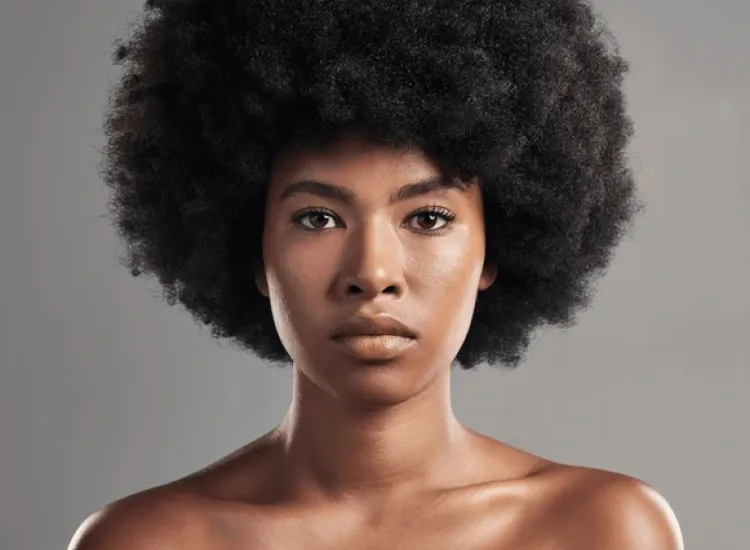
CARPET + PRECISION GRADIENT
This hair creation combines traditional techniques with bold contemporary styles. Each cut is a bespoke sculpture that enhances natural texture while creating a strong, modern silhouette.
1. PRELIMINARY ANALYSIS AND CONSULTATION
Our process begins with a complete diagnosis of your hair: density, curl type, growth direction, and face shape. This analysis allows us to determine the most suitable fade technique (skin fade, low fade, high fade) and the complexity of the tapestry patterns.
2. ARTISTIC CARPET TECHNIQUE
Carpet work is not just a simple haircut: it is a graphic art. We use precision razors and professional clippers to create:
· Geometric patterns: straight lines, curves, symmetrical zigzags
· Personalised abstractions: initials, meaningful symbols, tribal patterns
· Shading effects: light effects created by varying the density of the cut
Each pattern is discussed with you and executed with millimetre precision.
3. CREATING THE GRADIENT
Our specialist has mastered three gradient techniques:
· Progressive fade: imperceptible transition over several centimetres
· Contrasting fade: ‘shadow fade’ effect with a marked break
· Sculpted fade: perfectly follows the contours of the skull
We adapt the length at the temples, nape and sides to suit your head shape.
4. STRUCTURING THE AFRO
The afro is cut in several stages:
· Balancing the volume: we work layer by layer
· Overall shaping: oval, square or round depending on your face shape
· Defining the contours: hairline, brow line, clean neckline
· Texturising: for natural, airy movement
5. CARE AND MAINTENANCE ADVICE
We provide you with a personalised kit including:
· Moisturising shampoo specifically for frizzy hair
· Leave-in conditioner to define curls
· Light oil for shine without weighing hair down
· Natural bristle brush for volume
· 3-week maintenance programme
Duration of service: 1.5 to 2.5 hours depending on complexity
Longevity: 3 to 5 weeks with proper care
Price: Based on a personalised quote after consultation
Detangling your hair without damaging it: the professional technique
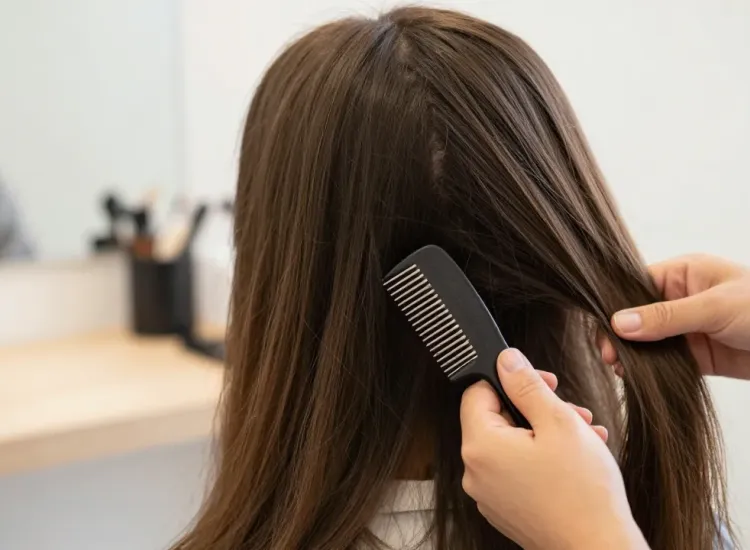
Detangling hair: a daily task we think we've mastered, but which is often the cause of a lot of damage to our hair. Brittle hair, split ends, loss of shine... What if the problem was your technique?
In this article, we reveal the secrets of professional detangling for healthy, strong and beautiful hair.
Why is proper detangling so important?
very strand of hair is precious. Brushing too aggressively, especially on wet hair (when it is most vulnerable), stretches the hair fibre to its breaking point. Repeated day after day, this bad habit weakens your hair, makes it dull and promotes frizz.
Adopting the right method preserves the health of your hair, protects your colour and ensures your hairstyle stays beautiful for longer.
The golden rule: always start at the ends
The most common mistake is to try to detangle hair starting at the roots. Doing so pushes knots downwards, causing them to accumulate and create a ‘tangle’ that is impossible to undo without pulling and therefore... breaking.
The professional technique is simple: always detangle from the ends towards the roots.
Our step-by-step guide to perfect detangling
Separate your hair: Divide your hair into several sections (two to four depending on its thickness). Working on smaller areas allows you to be gentler and more effective.
Start at the ends: Take a section and hold it firmly halfway down. Using your wide-toothed comb or brush, gently start detangling the last few centimetres at the ends.
Work your way up gradually: Once the ends are completely detangled, move up a few centimetres and repeat the process. Continue in this way, working your way up gradually until you reach the roots. Your comb should glide through your hair without resistance.
Repeat on all sections: Repeat the same process for each section of your hair.
The final step (optional): Once all sections are detangled, you can give your hair a final brush from roots to ends to smooth it and distribute natural oils.
The tools that make the difference
- n wet hair: Use a wide-toothed comb. This is the gentlest tool for removing knots without breaking hair fibres weakened by water. For extra help, apply a leave-in conditioner or detangling spray before you start.
- On dry hair: A boar bristle brush is ideal. It effectively detangles while smoothing the cuticles and adding shine. For stubborn knots, a brush with soft bristles can also be an excellent option.
Pro tip
Never rush! Detangling should be a gentle process. If you encounter a stubborn knot, don't force it. Isolate the strand, apply a drop of serum or hair oil to help loosen the knot, and use your fingers to gently untangle it before combing through again.
Ready to transform your hair care routine? For deep conditioning treatments and personalised advice on your hair type, feel free to book an appointment at our salon. Our experts will be delighted to help you achieve the hair of your dreams.
Rejoignez-nous
@Georges&Nathalie
Best Deals
OUR PLANS